
OCD Education
Understand OCD: how obsessions and compulsions work, common myths, and what the research says about getting better.
All OCD Education articles

Pure O and Mental Review: Why Replaying Thoughts Can Keep OCD Active
Mental review can feel like problem solving, but in Pure O it may keep OCD active. Learn how…
Read More →
Rumination vs. Problem Solving: How to Tell the Difference in OCD
Rumination can feel like problem solving, but it often keeps OCD going. Learn practical differences and how to…
Read More →
Morning OCD Spikes: Why Anxiety Can Feel Stronger After Waking
OCD can feel louder in the morning for some people. Learn why waking can trigger intrusive thoughts and…
Read More →
OCD in Children and Teens: Signs Parents May Notice
OCD can appear in childhood or adolescence. Learn signs parents may notice, how OCD can be misunderstood, and…
Read More →
OCD and Health Anxiety: Understanding the Checking Loop
Health anxiety and OCD can overlap when body checking, reassurance, and online searching become repetitive. Learn how the…
Read More →
Mental Compulsions in OCD: Rumination, Reviewing, and Silent Rituals
Mental compulsions can be hard to spot because they happen internally. Learn how rumination, reviewing, and silent rituals…
Read More →
OCD and Online Research: When Googling Becomes a Compulsion
Online research can be useful, but OCD can turn Googling into a reassurance loop. Learn the warning signs…
Read More →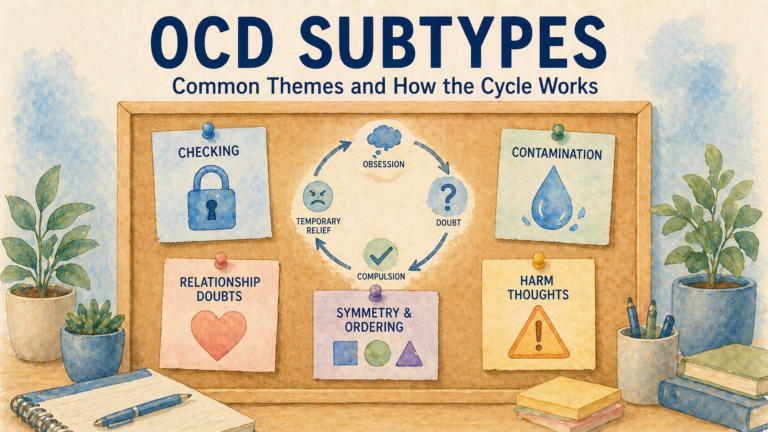
OCD Subtypes: Common Themes and How the Cycle Works
OCD subtypes describe common themes like contamination, harm, checking, and relationship doubts. Learn why the OCD cycle matters…
Read More →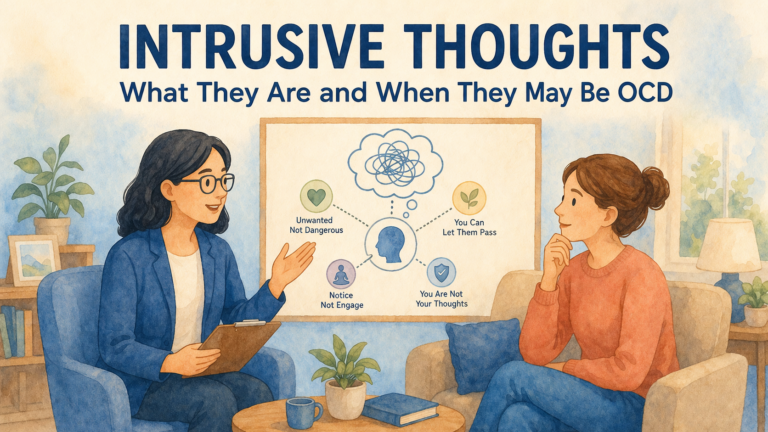
Intrusive Thoughts: What They Are and When They May Be OCD
Intrusive thoughts are unwanted thoughts, images, or urges. Learn when they may be part of OCD and what…
Read More →Practise what you read, a few minutes a day
The ocd.app app turns these ideas into short daily exercises, built with clinical psychologists and backed by 22 peer-reviewed studies.
Start free →