
 Scrupulosity OCD facts
What is Scrupulosity OCD?
Scrupulosity OCD is a form of Obsessive-Compulsive Disorder (OCD) characterized by excessive concerns about morality, ethics, and religious practices. Individuals with scrupulosity often experience intense guilt, fear, and anxiety over perceived sins or moral failings, leading them to engage in compulsive behaviors aimed at achieving moral purity or religious correctness. This condition can significantly impact one’s quality of life, making it crucial to recognize and address the symptoms early.
Scrupulosity OCD identification
Identifying Scrupulosity OCD
Scrupulosity can manifest in various ways, including:
Scrupulosity OCD facts
What is Scrupulosity OCD?
Scrupulosity OCD is a form of Obsessive-Compulsive Disorder (OCD) characterized by excessive concerns about morality, ethics, and religious practices. Individuals with scrupulosity often experience intense guilt, fear, and anxiety over perceived sins or moral failings, leading them to engage in compulsive behaviors aimed at achieving moral purity or religious correctness. This condition can significantly impact one’s quality of life, making it crucial to recognize and address the symptoms early.
Scrupulosity OCD identification
Identifying Scrupulosity OCD
Scrupulosity can manifest in various ways, including:
- Excessive Praying or Religious Rituals: Spending an inordinate amount of time praying or performing rituals to avoid perceived sins.
- Repeated Confessions: Constantly seeking reassurance from religious leaders or loved ones about one’s moral standing.
- Avoidance Behaviors: Steering clear of certain situations or activities that might lead to moral or ethical dilemmas.
- Intrusive Thoughts: Persistent, unwanted thoughts about violating moral or religious beliefs
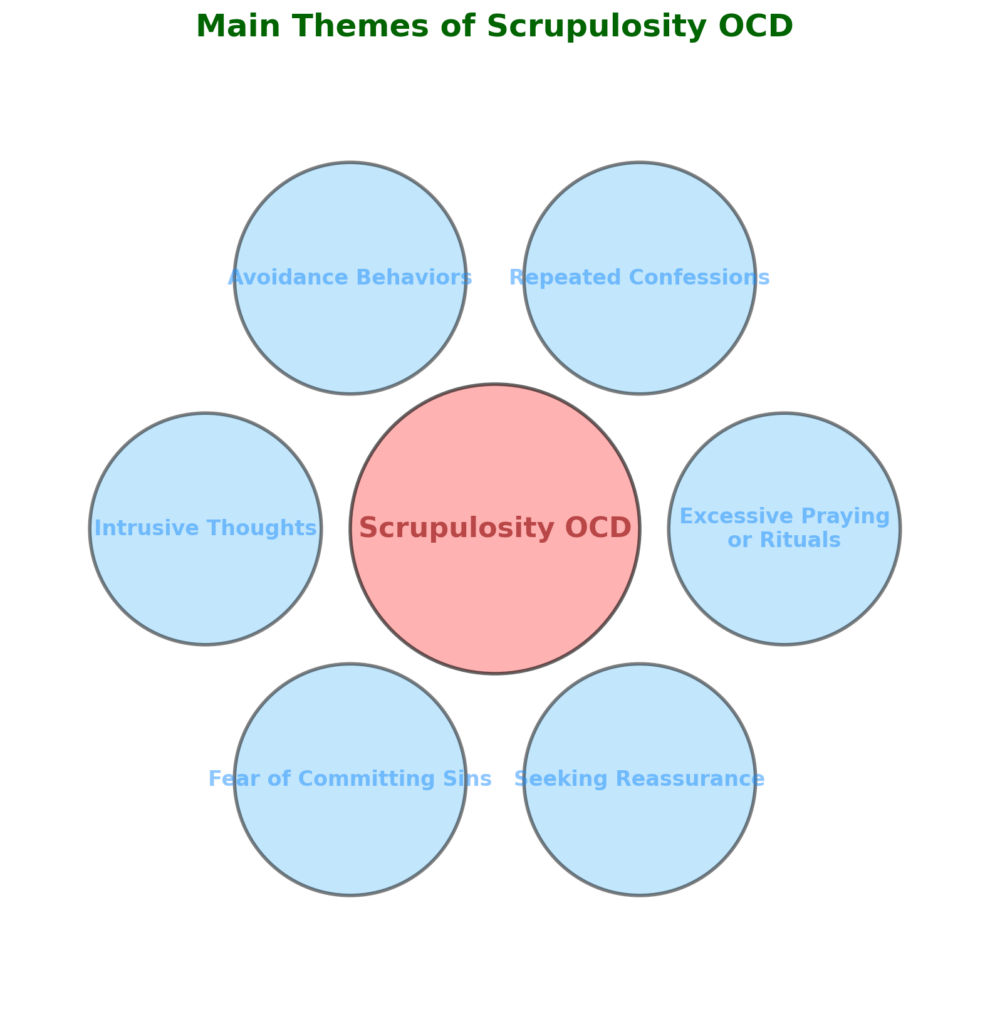 Diagram: Scrupulosity OCD themes
A scrupulosity OCD test can help you reflect on whether religious fears, moral doubt, guilt, or the need to feel completely certain have become repetitive and distressing. This page is not a diagnosis. It is a private self-assessment and a starting point for understanding patterns that may be worth discussing with an OCD-informed professional.
What This Scrupulosity OCD Test Looks At
Scrupulosity is commonly described as OCD focused on religious or moral obsessions. For some people, the fear centers on sin, prayer, rituals, blasphemy, or whether they have offended God. For others, the fear is more moral than religious: “Am I a bad person?”, “Did I lie?”, “Was that thought unethical?”, or “What if I caused harm by not being careful enough?”
The key pattern is not sincere faith, healthy values, or ordinary guilt. The concern is when doubt becomes sticky, urgent, and hard to satisfy, followed by checking, confessing, repeating, researching, mental review, or reassurance seeking that gives short relief but keeps the cycle going.
Religious Scrupulosity vs Moral OCD
Religious scrupulosity often attaches to spiritual practices, sacred rules, prayer, confession, worship, or fear of punishment. Moral OCD can look similar but may focus on honesty, fairness, justice, identity, intent, or whether a person is “good enough.” The content may differ, but the loop is often the same: intrusive doubt, anxiety, a search for certainty, temporary relief, and then more doubt.
If your worries are mainly about intrusive thoughts that feel unacceptable or frightening, you may also want to compare this page with the Pure O OCD test guide. If you want a broader screen for common OCD patterns, use the OCI-4 OCD screening test.
Common Signs This Test Can Help You Notice
- Repeated fear that you sinned, lied, offended someone, or acted against your values.
- Feeling unable to move on until you review an event, prayer, thought, or conversation “correctly.”
- Confessing, apologizing, researching, or asking for reassurance more than the situation realistically requires.
- Avoiding ordinary choices because they might be morally or spiritually wrong.
- Trying to neutralize a thought with another thought, phrase, prayer, or mental check.
- Feeling temporary relief after a compulsion, followed by the same doubt returning later.
How To Use Your Result
Your result should be treated as information, not a label. A higher score can mean the pattern deserves closer attention, especially if the worries take time from your day, interfere with relationships or faith practice, or make you feel trapped in repeated checking. A lower score does not mean your distress is unimportant; it may simply mean this specific subtype is not the best fit.
For next steps, read the full guide to Scrupulosity OCD: Moral and Religious Doubts Explained, then explore practical support through OCD exercises. If symptoms feel intense, confusing, or risky, consider speaking with a licensed clinician who understands OCD and exposure and response prevention.
Frequently Asked Questions
Is scrupulosity only religious?
No. Scrupulosity can involve religion, but it can also focus on morality, honesty, justice, guilt, or fear of being a bad person. Some people experience both religious and moral themes.
Can this test diagnose scrupulosity OCD?
No. This is a self-assessment, not a diagnosis. It can help you organize what you are experiencing and decide whether to seek support from an OCD-informed professional.
What is the difference between guilt and scrupulosity?
Ordinary guilt usually connects to a specific situation and can be resolved through proportionate repair. Scrupulosity tends to demand certainty, repeated checking, reassurance, confession, or mental review even when the situation has already been addressed.
What kind of support helps scrupulosity?
Many OCD specialists use exposure and response prevention, often adapted carefully so treatment respects the person’s genuine values or faith while reducing compulsive checking and reassurance seeking.