
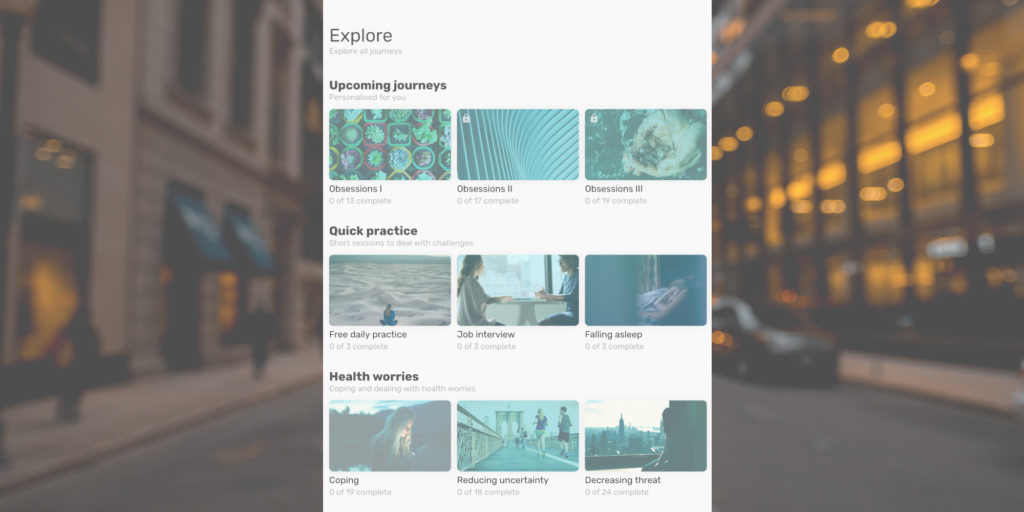
ocd.app is an OCD self-help app built on cognitive behavioural therapy (CBT). Instead of long lessons, it gives you short daily exercises that train you to notice the beliefs that keep OCD going, and to choose a more helpful thought instead. You can try three of them right here, then see everything the app includes.
Try an exercise from the app
Exposure and response prevention (ERP) means facing the thoughts OCD makes you avoid, without doing the ritual. Pick a thought from the app that makes you uneasy, then stay with it.
- I need absolute certainty
- Uncertainty is unmanageable
- Uncertainty is overpowering
- I must always be certain
- I have to avoid uncertainty
- Uncertainty is my enemy
- Uncertainty is unbearable
- I can't face uncertainty
- I can't tolerate not knowing
- Not knowing is unbearable
These are real statements from the ocd.app app. For each one, decide: is it OCD thinking that keeps the cycle going, or a helpful thought to practise?
- Uncertainty is my enemy
- Uncertainty is overpowering
- I must have complete control over everything
- I need absolute certainty
- I can deal with uncertainty
- I crush my fear of uncertainty
- I can withstand uncertainty
- Feeling uncertain is a natural part of life
An urge is a wave: it rises, peaks and passes, even when you do nothing. Breathe with the circle for 40 seconds — in for 4, out for 6 — and let the urge be there without acting on it.
I can deal with uncertainty
Educational practice, not therapy or a diagnosis. Practise daily in the ocd.app app →
How the exercises work in the app
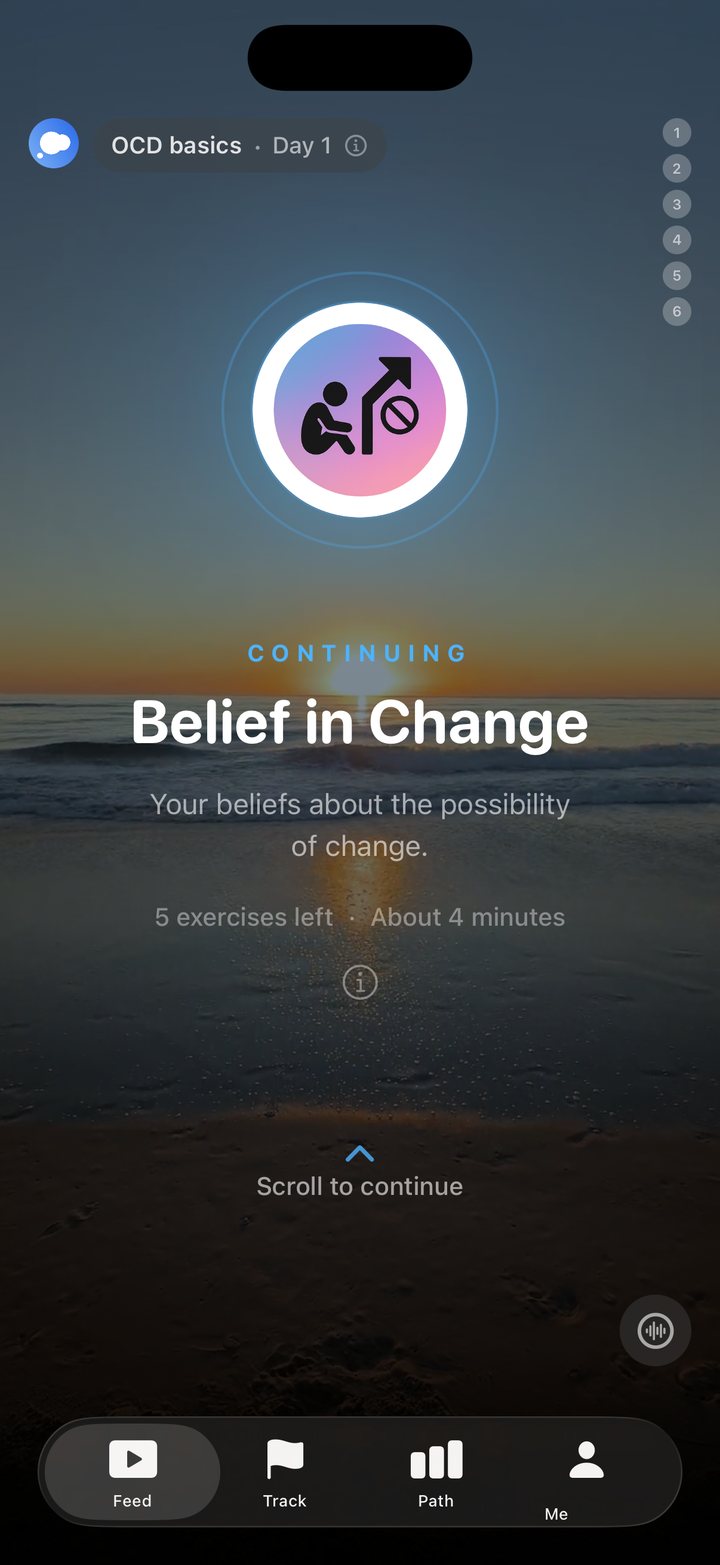
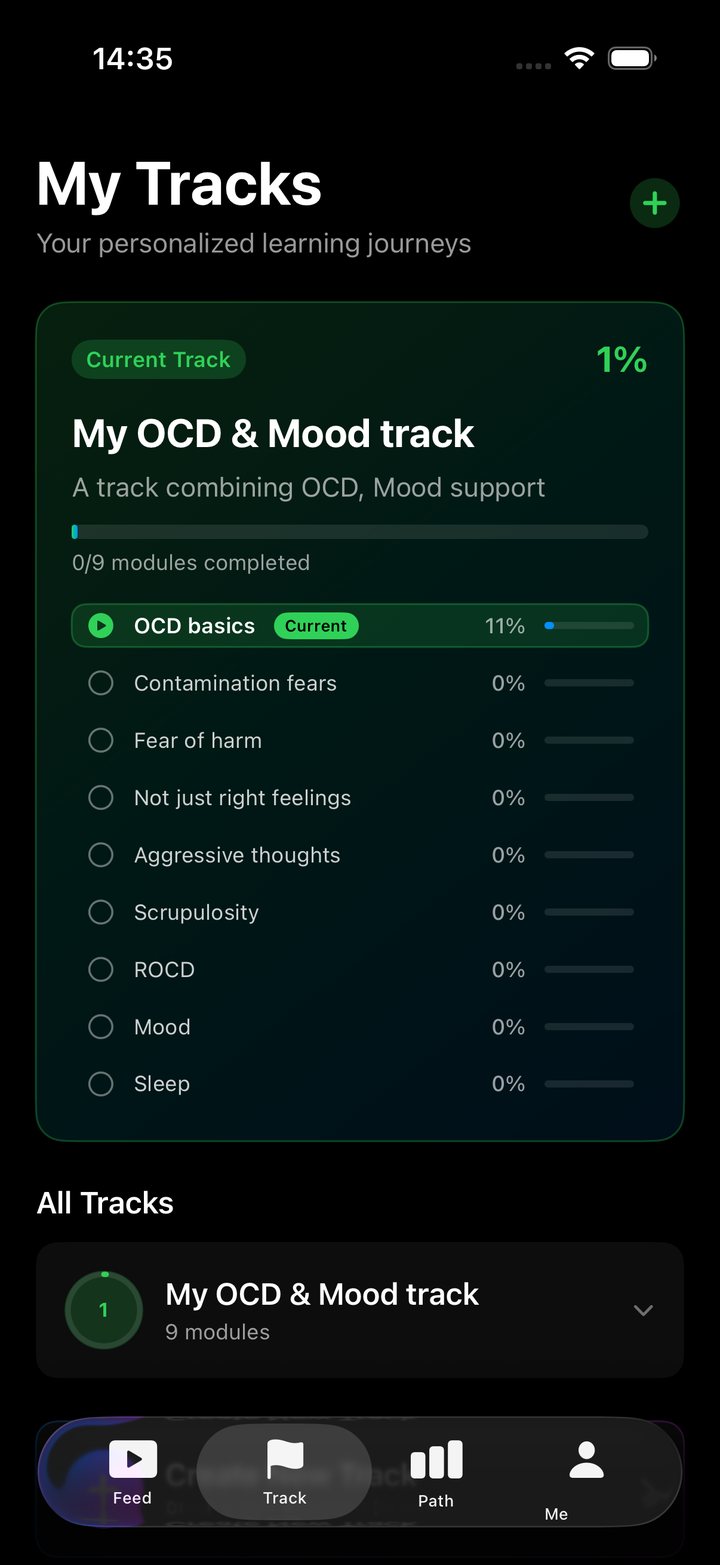
When you start, you choose the challenges you want to work on (for example OCD, relationship doubts or anxiety) and take a short self-assessment. The app builds a track for you: a series of modules, each split into days.
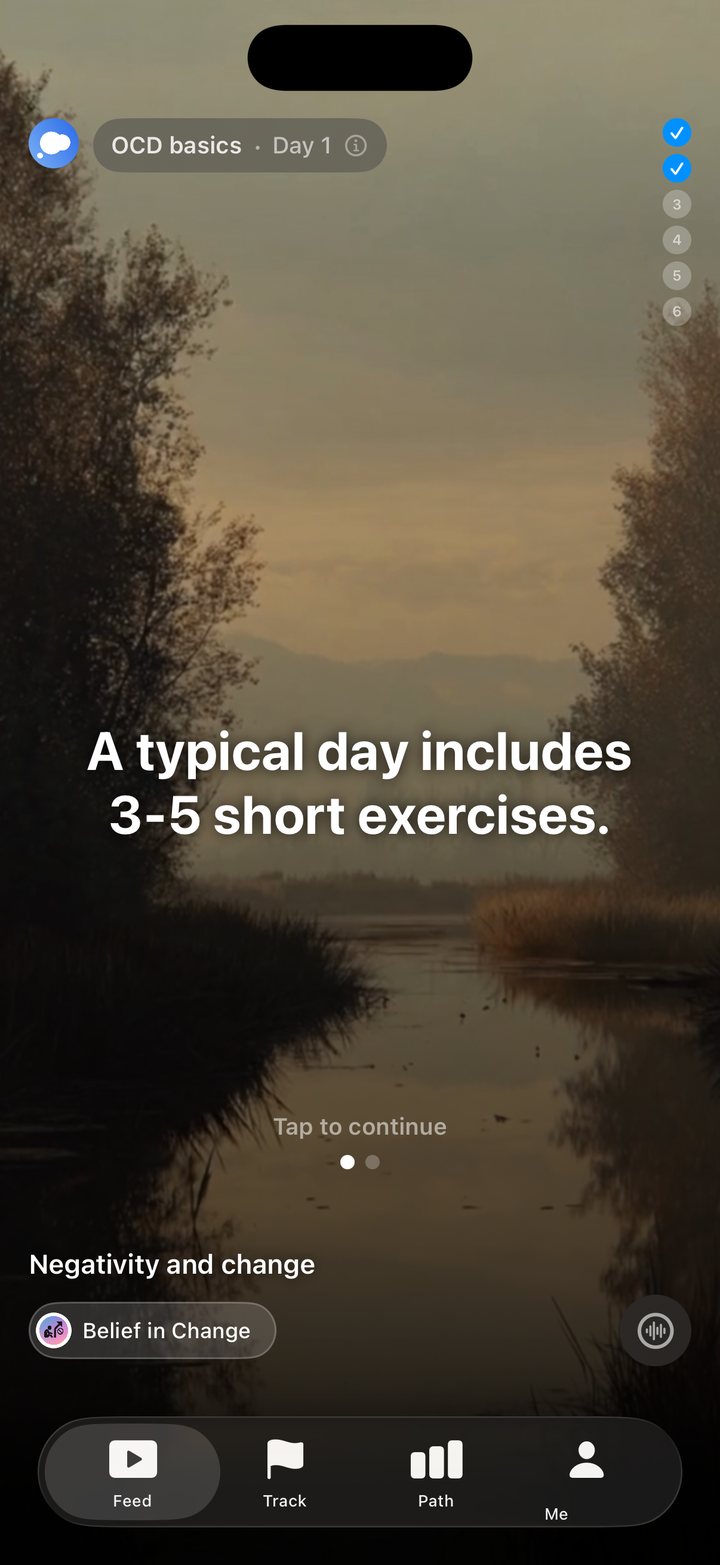
- A few minutes a day. A typical day is a handful of short exercises around one theme, a few minutes in total.
- One belief at a time. Every day focuses on one belief, such as “I must be certain”, “having a thought means I want it” or “if it doesn’t feel right, something is wrong”.
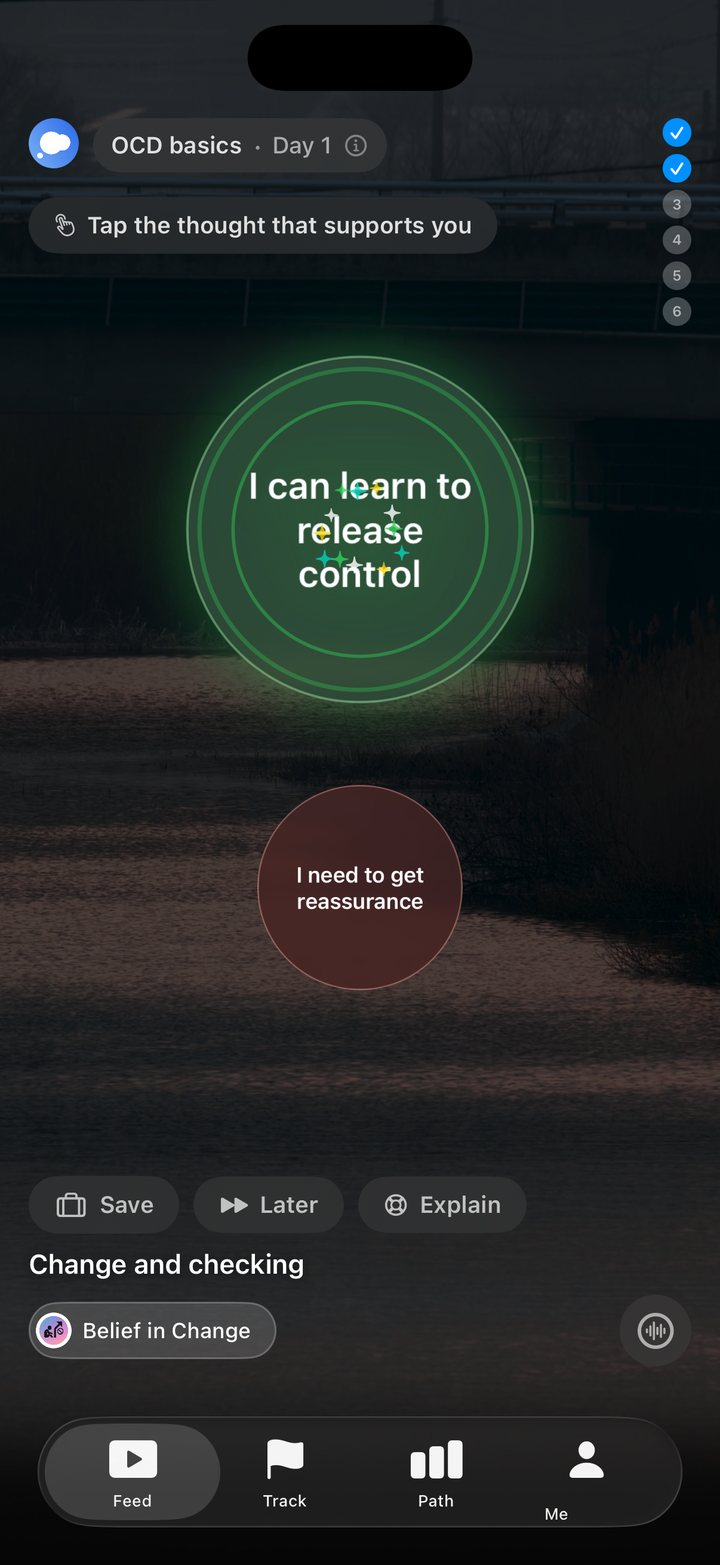
- Games, not homework. You sort, swipe and tap through real statements: the OCD thought on one side, the helpful thought on the other. Repetition makes the helpful one easier to reach when OCD shows up.
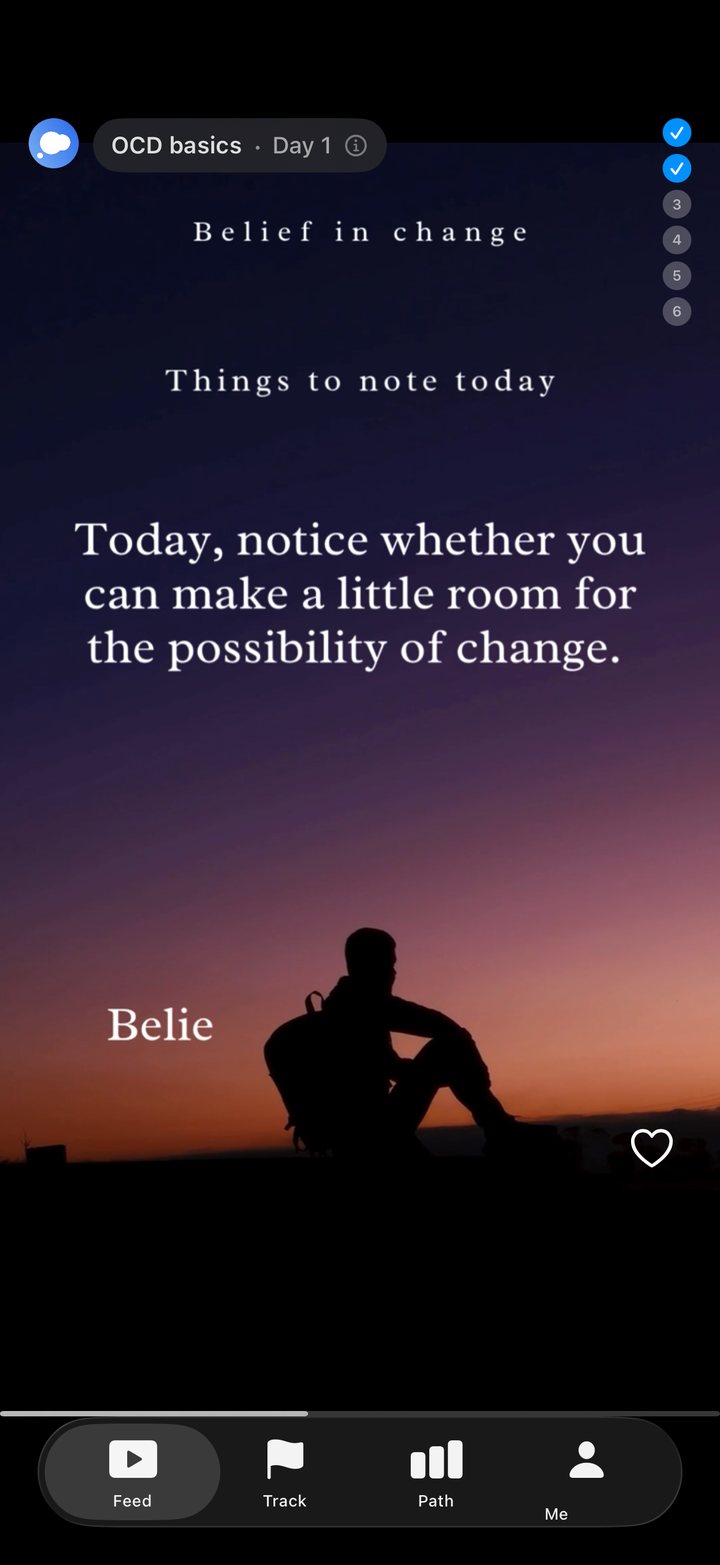
- Something to take into your day. Each session ends with a short note on what to notice, and a breathing moment.
The exercise types
All of the exercises use the same idea: see the OCD belief clearly, then practise the thought that loosens its grip. They come in different formats so practice doesn’t get stale:
- Swipe to sort: keep the helpful thoughts, let the OCD ones go.
- Pick the helpful one and Choose the right one: two or more thoughts, one tap.
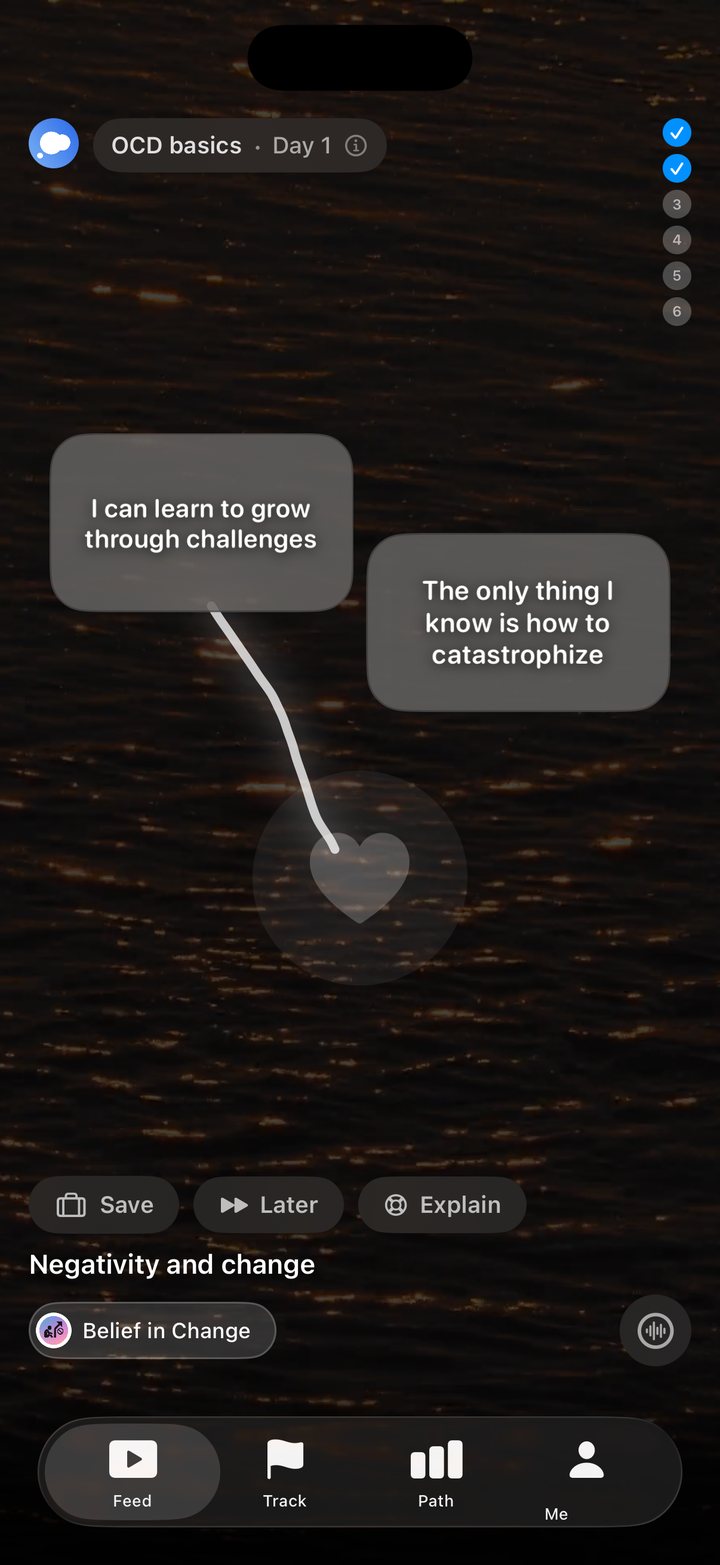
- Draw a line to the heart: connect the supportive statement.
- Turn the card, Keep or toss, Keep or reject and Find the face: quick variations on the same skill.
- Myth vs. fact: common OCD myths, with an explanation for each answer.
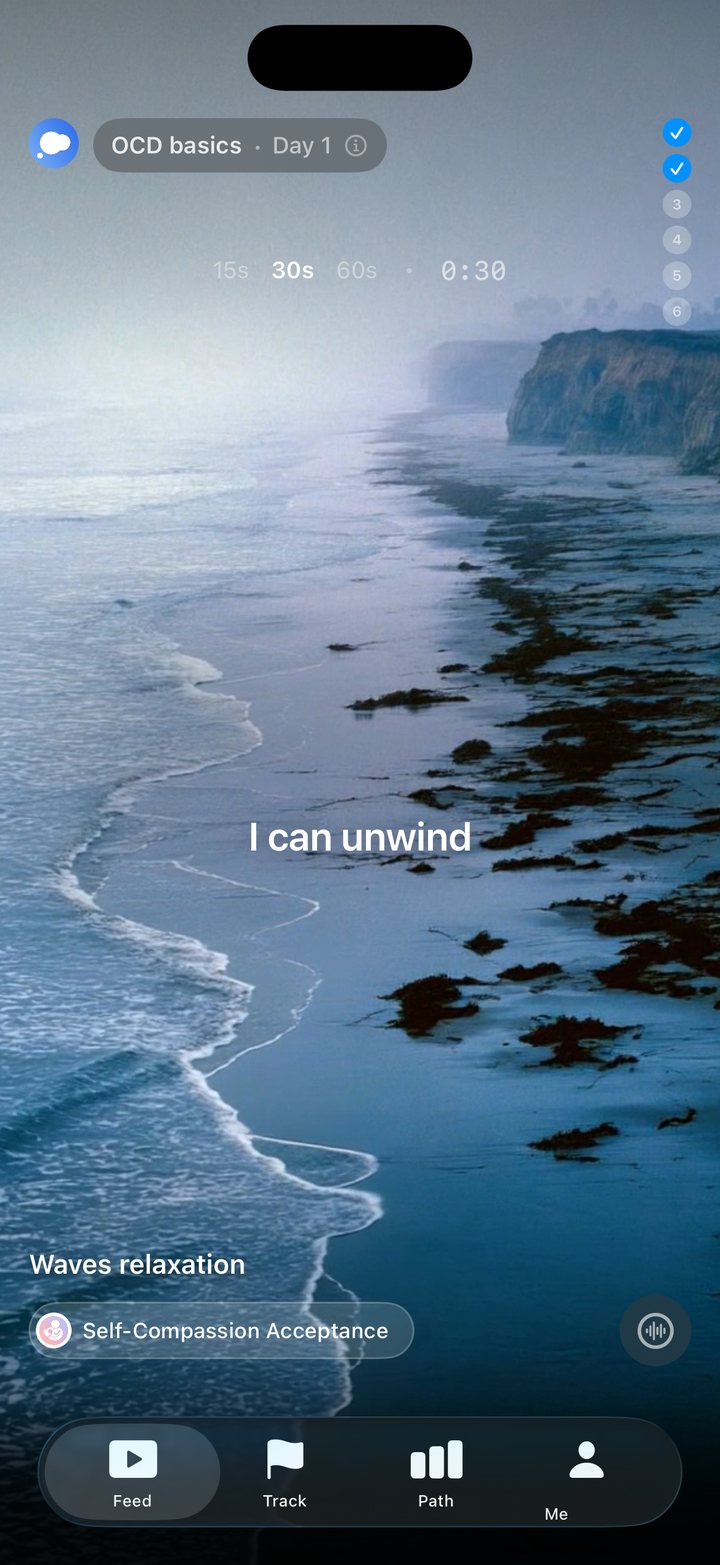
- Waves: a short breathing exercise with one helpful statement, for riding out an urge.
- Real-life situations and topic exams (Premium): apply what you practised to everyday scenes, and check what you have learned.
OCD modules in the app
Each module is a short course made of days. It opens with a quick self-assessment so the app can measure your progress, then each day focuses on one OCD belief. A short explanation comes before and after every exercise, each day ends with a breathing moment, and recap days mix what you have practised so it sticks.
| Module | Days | Exercises | What the days cover |
|---|---|---|---|
| OCD basics (free) | 12 | 76 | Intolerance of uncertainty, living with doubt, checking and reassurance, fear of self, threat sensitivity, mistakes and perfection, trusting your memory, feeling worthy of love, plus 3 recap days |
| Contamination fears | 2 | 14 | The threat of contamination, then a recap |
| Fear of harm | 2 | 13 | Feeling like a threat to others, then a recap |
| Aggressive thoughts | 4 | 27 | Beliefs about harmful thoughts, fear of thoughts becoming actions, controlling aggressive urges |
| Not just right feelings | 2 | 13 | The need for things to feel “just right”, then a recap |
| Scrupulosity | 2 | 13 | Moral perfectionism and fear of self |
| Fear of sin | 1 | 4 | Moral perfectionism |
| Sexual orientation | 5 | 35 | “Naturalness” beliefs, arousal and identity doubts, hidden-orientation anxiety, fear of losing your identity, then a recap |
| Body obsession | 2 | 4 | Appearance perfectionism and compulsive comparing |
Most people start with OCD basics, then add the module that matches their main theme. Day 1 of OCD basics, for example, looks like this: a two-minute self-assessment, then “New concept: uncertainty”, “Uncertainty and me”, “Negativity and uncertainty” and “Uncertainty and checking”, and finally a Waves breathing exercise.
Beyond OCD, the app has over 50 modules and more than 4,000 exercises for anxiety, relationship OCD, health anxiety, thinking loops, mood, sleep, trauma and self-esteem, so you can add related challenges to your track.
More than exercises
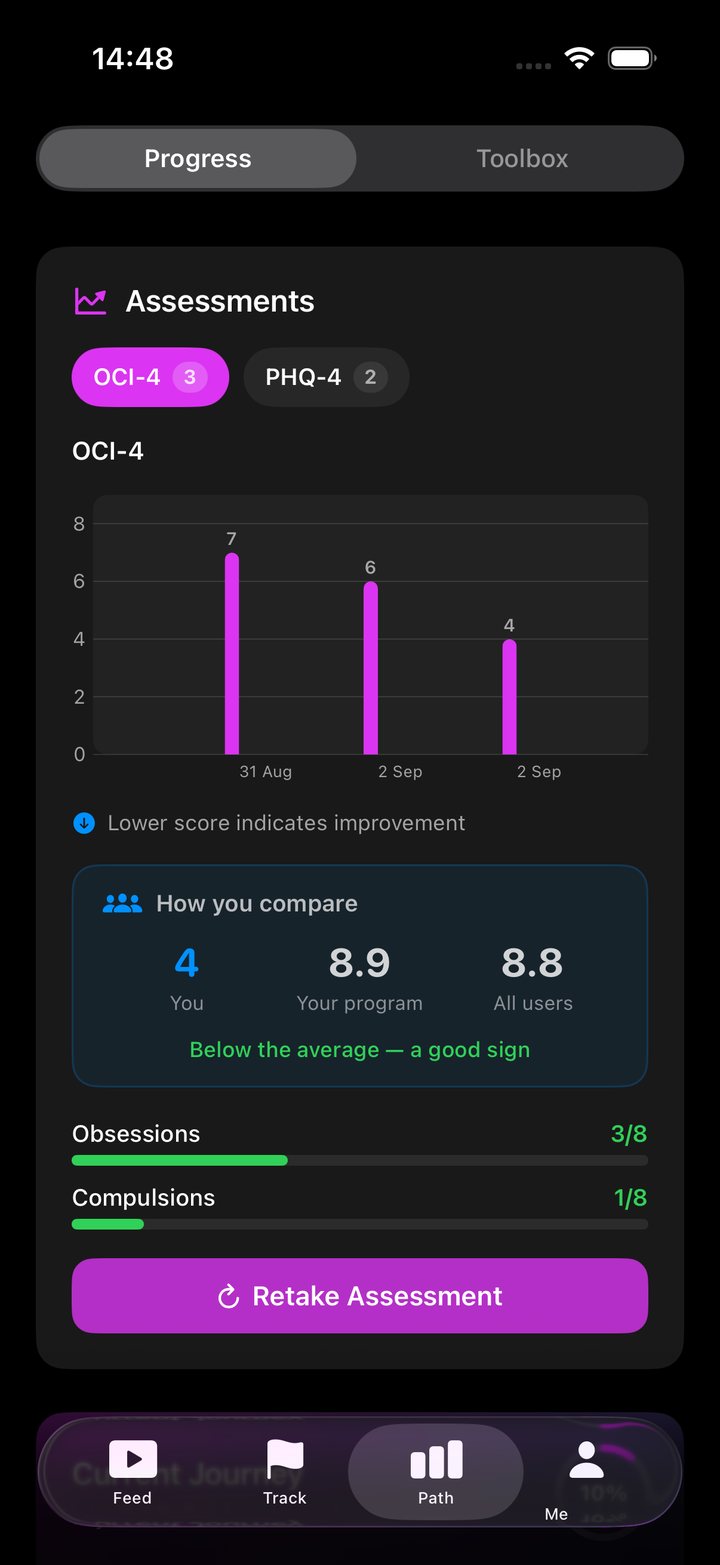
- OCI-4 check-ins. A short, validated OCD questionnaire you retake over time, with a chart of your scores. You can also take the OCI-4 here.
- Mood check-ins, streaks and module badges to keep you going.
- My Toolbox: save the statements that help you most and practise them again.
- Community Toolbox: browse helpful thoughts other people have shared, anonymously.
- Relaxations and background sounds for calmer moments.
- A home-screen widget with a daily statement, and gentle reminders.
- An SOS button that links to crisis resources.
- Invite your therapist to follow your progress, if you are in therapy.
How to get the most out of it
- Practise daily, briefly. Short, regular sessions work better than long, occasional ones.
- Choose a calm time. First thing in the morning or before bed works well.
- Don’t use the app for reassurance. Opening it in the middle of a compulsion to feel certain can become another ritual. Practise when you are calm, and bring the skill to the hard moments.
- Stay with it for a couple of weeks. Belief change builds with repetition. Once you finish your first track, one or two sessions a week can keep it going.
Free and Premium
The OCD basics module is free. Premium unlocks every module, real-life situations, topic exams and personalised relaxations, and starts with a 7-day free trial. See plans and prices, or start your free trial.
The research behind it
ocd.app was developed with clinical psychologist Prof. Guy Doron and is backed by 22 peer-reviewed studies. In one study, 14 days of use strengthened helpful beliefs, and the effect lasted at least 30 days after people stopped using the app. More than 150,000 people have used it. Read about the research.
Frequently asked questions
Is ocd.app a replacement for therapy?
No. ocd.app is a self-help tool that works well alongside therapy or while you wait for it. Exposure and response prevention (ERP) with an OCD-trained therapist is the first-line treatment for OCD. If OCD is severely affecting your life, or you have thoughts of harming yourself, please reach out to a professional or a crisis line.
How long does it take each day?
Usually a few minutes: each day on your track is a handful of short exercises around one theme.
Is the app free?
You can download it and use the OCD basics module for free. Premium unlocks all modules and features, with a 7-day free trial.
Does it work for Pure O, harm or religious OCD?
Yes. The exercises target the beliefs behind OCD rather than a single behaviour, and there are dedicated modules for harm and aggressive thoughts, scrupulosity and fear of sin, and sexual orientation doubts.
Is it anonymous?
You can use the app without creating an account. Shared statements in the Community Toolbox are anonymous.
Which phones does it run on?
iPhone and Android. Get started.