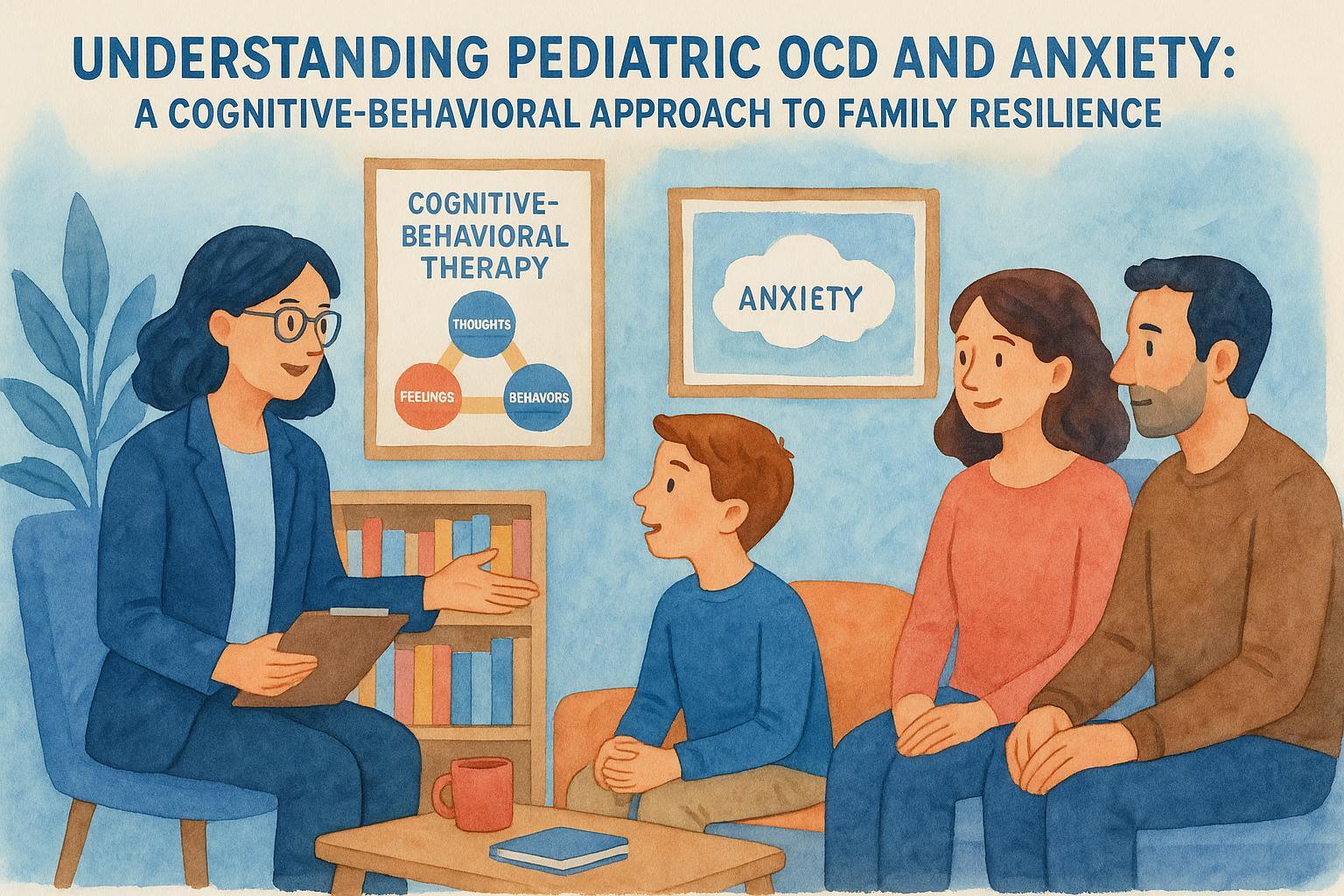
Obsessive-Compulsive Disorder (OCD) in children presents unique challenges that can greatly affect their school performance and family dynamics. This article delves into the cognitive-behavioral therapy (CBT) approach, which emphasizes understanding maladaptive beliefs, nurturing resilience, and facilitating effective family support.
The Nature of Pediatric OCD and Anxiety
Pediatric obsessive-compulsive disorder (OCD) and anxiety disorders often unfold uniquely in children, presenting distinct symptoms, triggers, and repercussions for their schooling and family dynamics. While many adults with OCD may recognize their obsessions as irrational, children often lack this self-awareness, creating a more significant emotional burden when confronting their compulsions. For instance, a child may experience an overwhelming fear of making a mistake, leading to compulsive behaviors like excessive handwashing or repeated checking of homework, even if they are aware that such actions may seem excessive.
Common obsessions in children can include fears of contamination, fears of causing harm to themselves or others, or superstitious thoughts that compel them to perform certain rituals. These obsessions can manifest in specific compulsions, such as counting, repeating certain phrases, or arranging items in precise ways. For example, a child might feel an intense need to ensure that their backpack is perfectly organized before leaving for school, fearing that failure to do so could result in something terrible happening.
The impact of pediatric OCD and anxiety on school life can be profound. Children may struggle to concentrate in class due to intrusive thoughts, which can lead to academic decline and social isolation. They may avoid school altogether or experience significant distress on school days, hampering their ability to learn and develop essential social skills. Families often find themselves caught in a difficult dynamic, as they may inadvertently enable compulsive behaviors by accommodating their child’s needs, creating a cycle that reinforces the anxiety.
Understanding the triggers of these disorders is crucial for early intervention. Stressful life events, changes in routine, or transitions, such as starting a new school year, can exacerbate symptoms and warrant immediate attention. Engaging in early intervention strategies is vital. When addressed promptly, children can learn effective coping strategies and resilience techniques that mitigate the long-term impact of OCD and anxiety on their development.
Family therapy plays a critical role in this journey, fostering a supportive environment for the child. It encourages open communication about fears and compulsions, allowing family members to understand and empathize with the child’s experience. Therapeutic techniques can equip families with tools to balance support and challenge avoidance behaviors tactfully, thus promoting healthier responses to anxiety.
In conclusion, recognizing the distinct nature of pediatric OCD and anxiety, along with their associated compulsions and symptoms, is essential for timely intervention. A collaborative approach that includes family involvement not only aids in managing these disorders but also focuses on strengthening the family unit as a whole. With appropriate support and resources, children can learn to navigate their fears and compulsive behaviors, ultimately leading to improved academic performance and healthier family interactions. This framework of understanding fosters resilience, enabling children to flourish despite the challenges posed by OCD and anxiety.
Cognitive-Behavioral Therapy: Understanding Thoughts and Emotions
Cognitive-Behavioral Therapy (CBT) offers a structured and effective approach to understanding and addressing pediatric OCD and anxiety by focusing on the interplay between thoughts and emotions. Central to CBT is the model of ‘beliefs → thinking → feeling,’ which posits that underlying beliefs shape how children interpret experiences, ultimately affecting their emotional responses and behaviors. For children experiencing OCD, these maladaptive beliefs often manifest in repetitive thoughts or obsessive fears that lead to compulsive behaviors intended to alleviate distress.
To illustrate the impact of this model, consider the case of a 9-year-old boy named Alex, who is plagued by intrusive thoughts about harm coming to his family. This belief precipitates a cycle: he thinks, “If I don’t check the locks 10 times, my family will get hurt,” which generates intense feelings of anxiety and compels him to perform the checking ritual. The more he engages in this compulsion, the stronger the belief that these actions are necessary becomes, further entrenching his anxiety.
Conversely, consider Emma, a 7-year-old girl struggling with social anxiety and the fear of being judged by her classmates. Initially, her thought pattern might align with, “If I talk in class, everyone will laugh at me.” This belief amplifies her feelings of fear and reluctance to engage with peers. However, through cognitive restructuring, Emma learns to challenge this belief, reframing it to, “Some people might not agree with me, but others may appreciate my input.” This shift in thinking significantly reduces her anxiety, allowing her to participate in class discussions more freely.
Identifying these dysfunctional beliefs is the first step in CBT. Therapists work with children to articulate their thoughts and feelings tied to specific situations, emphasizing the importance of recognizing distorted thinking patterns. This process involves several techniques, including thought logs, cognitive restructuring, and exposure exercises. For instance, when confronted with school-related anxiety, children learn to confront their fears in a controlled, gradual manner, starting with low-stakes situations and moving towards more challenging ones.
To further enhance the therapeutic process, incorporating family members into treatment can be beneficial. Families can play a critical role in supporting children’s efforts to challenge and reshape their thinking. By fostering open communication about fears, obsessions, and compulsions, families create a supportive environment where children feel understood. This ensures that children are not solely reliant on the therapist for change but can practice new skills at home, which reinforces positive thought patterns and behaviors.
Ultimately, the cognitive-behavioral therapy approach not only addresses the immediate symptoms of pediatric OCD and anxiety but also instills a sense of empowerment in children. As they learn to identify and manage their thoughts, emotions, and subsequent behaviors, they build resilience, equipping themselves with the tools needed to navigate the complexities of childhood and adolescence. This proactive stance serves as a foundation for their emotional well-being, preparing them for future challenges as they grow into adulthood.
Family Therapy and Building Resilience
In addressing pediatric OCD and anxiety, family therapy can serve as a crucial component in creating a supportive environment for affected children. This therapeutic approach emphasizes the role of family dynamics in the treatment process, positioning the family not just as a support system but as active participants in fostering resilience. When families come together in therapy sessions, they share their experiences, listen to one another, and collaboratively develop strategies to cope with the challenges posed by OCD and anxiety.
Inclusive family sessions foster a deeper understanding of each member’s experiences, which is particularly vital when navigating the complexities of childhood compulsions and school anxiety. Often, family members may have different perspectives on the child’s behaviors, which can inadvertently influence responses and interventions. Through therapy, families learn to recognize these varying viewpoints, fostering empathy and reducing misunderstandings. For example, a sibling might perceive a child’s compulsive washing as a quirky habit, while parents might view it as a distressing symptom requiring immediate intervention. Therapy helps bridge these gaps, allowing each member to appreciate the emotional undercurrents of these behaviors.
Communication skills are paramount in family therapy, particularly for families facing the additional stressors brought on by OCD and anxiety. In therapy, families can explore effective ways to communicate their feelings and needs, thus developing a more cohesive unit. Families might practice “I” statements, enabling members to express their emotions without casting blame or triggering defensiveness. For instance, rather than saying, “You make everyone anxious when you have to be perfect,” a member can rephrase, “I feel anxious when there’s a lot of pressure to meet expectations.”
Moreover, family therapy creates a safe space for children to voice their fears and compulsions. When parents and siblings become educated about the nature of OCD and anxiety, they can provide validation and understanding rather than reactions of confusion or frustration. Children benefit immensely from knowing their family members are knowledgeable about their struggles, and that they are united in addressing those challenges. This support can significantly ease school anxiety, as children feel more grounded when they know their family stands behind them.
Building resilience is another vital outcome of family therapy sessions. As families learn to navigate the stressors associated with pediatric OCD and anxiety together, they foster a collective resilience that extends beyond treatment. This means that as children encounter anxiety-provoking situations at school or during various activities, they can draw upon the coping strategies cultivated within the family dynamic. Techniques learned during therapy, such as grounding exercises, role-playing scenarios, or relaxation strategies, are not just for the child but can be practiced as a family, promoting unity and consistency in approaches.
In summary, family therapy is essential in supporting children with pediatric OCD and anxiety, as it encourages understanding, enhances communication, and cultivates resilience. By approaching these challenges collectively, families can reinforce adaptive coping strategies that empower both the child and the family as a cohesive unit, fostering positive outcomes throughout the therapeutic process.
Conclusions
In conclusion, addressing pediatric OCD and anxiety through a cognitive-behavioral lens not only mitigates symptoms but also strengthens family bonds. Early intervention, focused family therapy, and flexibility in thinking can promote resilience and emotional well-being in children, paving the way for a brighter future.