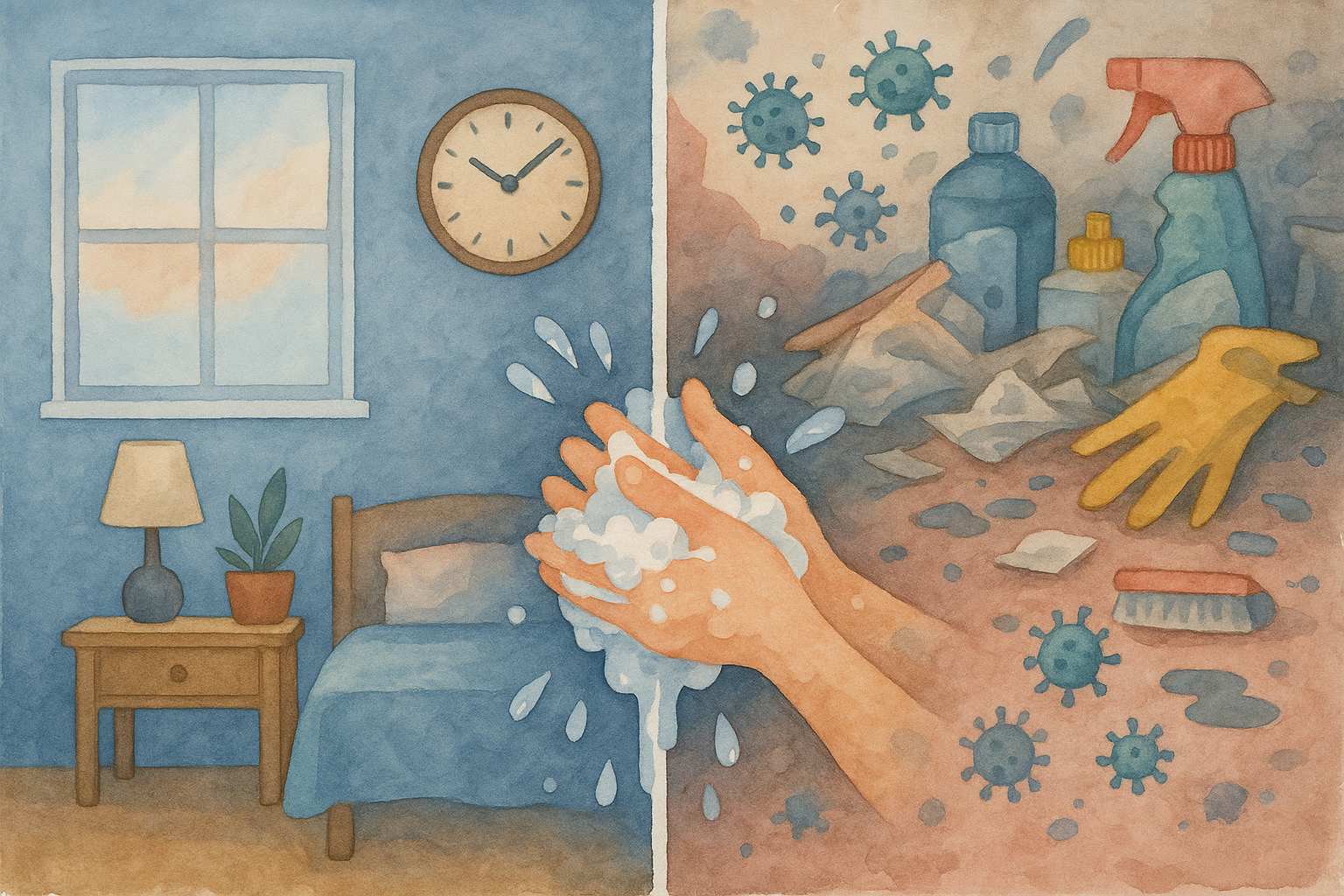
Contamination OCD encapsulates an intricate web of anxiety rooted in the fear of germs and compulsions for cleanliness. This article explores how Cognitive Behavioral Therapy (CBT) can effectively reshape our understanding of these maladaptive beliefs. By examining the connection between beliefs, thoughts, and feelings, we can foster mental resilience and improved wellbeing.
The Nature of Contamination OCD
Contamination OCD is characterized by intense fears surrounding germs, dirt, and cleanliness, leading individuals to experience overwhelming anxiety associated with contamination. This type of Obsessive-Compulsive Disorder (OCD) manifests itself through a range of symptoms and compulsions directly linked to the individual’s fear of being contaminated. Those suffering from Contamination OCD often find their daily functioning significantly impacted, as their preoccupations about germs disrupt their routines and interactions.
Individuals with Contamination OCD frequently experience obsessions—intrusive thoughts that provoke anxiety. These obsessions can range from fears of falling ill due to germs, to concerns about contaminating others or being contaminated themselves. For instance, Sarah, a 34-year-old teacher, has a persistent fear that the surfaces in her classroom are hosts to harmful bacteria. Every time she enters her classroom, thoughts of germs invade her mind, leading to intense anxiety and discomfort. As a result, she avoids physical contact with her students or refuses to touch shared materials, disrupting her teaching and affecting her relationships with her students and colleagues.
Compulsive behaviors in Contamination OCD often serve as temporary relief from the distressing obsessions. Excessive handwashing is one of the most common compulsions. This behavior isn’t just about personal hygiene; rather, it becomes a ritual aimed at alleviating anxiety. For example, Mark, a 28-year-old office worker, washes his hands excessively throughout the day. Despite the knowledge that he has washed his hands multiple times, he still feels it’s not enough. Each wash not only takes up significant time but also heightens his anxiety as he is constantly preoccupied with the notion that he has missed a spot or that his hands are still contaminated. Mark’s day revolves around this compulsion, leading him to isolate himself from social interactions, as he worries about places he perceives as dirty.
The impact of cleanliness obsessions extends beyond handwashing. Many individuals develop avoidance behaviors, steering clear of public places, public transport, or even areas where others congregate. For instance, Emma, a 22-year-old university student, avoids using restrooms in her campus buildings. Instead, she chooses a longer route to find a restroom that she deems “cleaner,” significantly delaying her attendance in lectures and affecting her academic performance. These compulsive avoidance behaviors further entrench the individual’s fears, as they come to equate avoidance with safety, creating a vicious cycle where the anxiety surrounding contamination only intensifies.
Hygiene anxiety also tends to manifest in various other behaviors, including excessive cleaning or the need to use disinfectants regularly. Individuals might spend hours cleaning their homes, turning a routine task into a compulsive ritual driven by the fear of germs. David, for example, dedicates his weekends to scrubbing every inch of his living environment, often going beyond what is necessary. This obsession with cleanliness leaves him exhausted and socially isolated, as friends and family may feel uncomfortable visiting his meticulously clean home.
In summary, Contamination OCD reveals the complex interplay of obsessions and compulsions that are rooted in fears related to germs and cleanliness. The symptoms extend beyond surface-level concerns, as individuals grapple with deep-seated anxiety that dictates their daily lives. With compulsive behaviors such as excessive handwashing and avoidance of public areas, the disorder not only impacts personal health and hygiene rituals but can also lead to significant impairment in the individual’s social and occupational functioning. Through understanding these symptoms and their manifestations, we can better appreciate the challenges faced by those grappling with Contamination OCD and recognize the urgent need for supportive interventions and therapeutic approaches tailored to their unique experiences.
Understanding Germ Fear and Handwashing Compulsions
Understanding Germ Fear and Handwashing Compulsions:
Germophobia, clinically recognized as mysophobia, manifests as an overwhelming fear of germs and contamination. A prominent aspect of this condition involves intense anxiety regarding cleanliness and hygiene, particularly connected to germs that are perceived as harmful. Individuals suffering from mysophobia often find themselves caught in an intricate web of irrational beliefs, driving them deeper into behaviors aimed at managing their fears. The psychological underpinnings of germophobia are multifaceted, but they primarily revolve around heightened sensitivity to anxiety and a distorted perception of health risks.
One primary driver of mysophobia is the belief that exposure to germs will inevitably lead to illness or suffering. This belief often evolves into handwashing compulsions, where the act of washing hands becomes a ritualistic behavior supporting individuals’ desperate need for safety and security. Each wash is not merely an action aimed at cleanliness; it is a psychological safety net. For many, the process of washing hands offers immediate relief from anxiety, creating a reinforcing cycle. Upon feeling dirty or contaminated, the individual washes their hands, thereby experiencing a temporary decrease in anxiety. However, this is often short-lived, prompting further compulsions.
For instance, consider Sarah, a 32-year-old woman who has struggled with germ fears for most of her adult life. Whenever she steps outside her home, the thought of touching door handles, public spaces, or even fellow pedestrians triggers an immense wave of anxiety. To combat this, Sarah engages in excessive handwashing, often going through a sequence of washing, rinsing, and drying her hands multiple times before she feels a semblance of comfort. The act becomes not only physical but also serves an emotional purpose. Sarah links her handwashing directly to her perceived safety—each rinse fortifies her belief that she is warding off the invisible threats posed by germs.
However, the compulsive handwashing does not merely provide comfort; it entrenches the underlying cycle of anxiety. As Sarah continues to wash her hands, her mind begins to reinforce the idea that exposure to germs is not just possible but likely inevitable. She develops a hyper-vigilance towards cleanliness, scrutinizing surfaces and distancing herself from situations she deems filthy. This escalated vigilance can severely impact her daily functioning, relationships, and overall mental wellbeing, often isolating her from social activities and leading to feelings of shame or embarrassment.
The repetitive nature of handwashing in relation to germ fears presents a classic case of operant conditioning, where the anxiety-reducing behavior is reinforced by temporary relief. Individuals like Sarah often find themselves trapped in this cycle of behavior, where their initial fear escalates into greater compulsive actions. Each time the cycle repeats, the individual becomes more entrenched in their beliefs regarding germs and cleanliness, creating a significant barrier to overcoming their compulsion.
The implications for mental health are considerable. As germophobia and the resultant handwashing compulsions escalate, individuals may suffer from increased anxiety, depression, and social withdrawal. The isolation stemming from their compulsive behaviors can contribute to a decline in general life satisfaction, leading to further compulsions as a misguided attempt to regain control over their environment and mental state.
Ultimately, understanding germ fear and handwashing compulsions requires a nuanced exploration of the cognitive distortions that underlie these experiences. Acknowledging how the act of handwashing serves as an emotional balm, while simultaneously increasing anxiety, allows for a more holistic awareness of the challenges faced by individuals with contamination OCD. This understanding sets the stage for future discussions on cleanliness obsessions and hygiene anxiety, which remain closely intertwined with the themes of fear and compulsive behaviors in the quest for safety and reassurance.
Cleanliness Obsessions and Hygiene Anxiety
Cleanliness obsessions and hygiene anxiety are significant components of contamination OCD, marked by an overwhelming preoccupation with maintaining cleanliness. Individuals grappling with these issues often believe they must create a germ-free environment to protect themselves from perceived threats. This obsession with cleanliness can distorts their perception of what is hygienic, leading to compulsive behaviors and emotional distress.
Consider the case of Sarah, a 32-year-old woman who found herself entrenched in daily rituals that revolved around cleanliness. Sarah’s journey began with a simple desire to maintain a tidy home. However, over time, her need for cleanliness escalated to a point where she felt compelled to sanitize every surface multiple times a day. This fixation turned her daily tasks into a never-ending cycle of scrubbing, wiping, and disinfecting. Each time she completed a task, she became hyper-aware of potential contaminants, resulting in an incessant worry that she had missed a spot. This looping thought process fueled her anxiety, compelling her to return to the same areas to clean again and again.
Sarah’s emotional response to her environment shifted dramatically. Where once she found quietude in her home, she became increasingly agitated, perceiving her surroundings as threatening. Guests were a source of panic; she could not invite friends over without worrying they would bring germs into her meticulously sanitized space. The perceived invasion of germs triggered a heightened sense of vulnerability, leading to feelings of shame and isolation. In discussions with her therapist, Sarah recognized how her belief that cleanliness equated to safety distorted her relationships and overall quality of life.
Another illustrative example is Mark, a high school teacher whose hygiene anxiety became increasingly debilitating. Mark believed that his role as an educator meant he was responsible for fostering a safe environment for his students. When he noticed a cough from one of his students, it ignited an overwhelming compulsion to sanitize every desk, doorknob, and shared resource in the classroom. This reaction stemmed from the belief that he could control illnesses by maintaining an immaculately clean workspace. Yet, the more he cleaned, the more anxious he felt. His preoccupation extended into his personal life; he spent hours each evening cleaning his home to ensure no germs could linger from his day at school.
Mark’s story highlights how cleanliness obsessions force individuals to navigate their lives through a lens of fear rather than reason. The emotional toll is significant, and every day becomes a battle against invisible threats. The excessive cleaning provides temporary relief, but ultimately reinforces a cycle of anxiety. It is this cycle that leads individuals like Mark to experience symptoms of depression, low self-esteem, and irritability. The perpetual need to meet an unattainable standard of cleanliness generates a sense of failure when perfection inevitably falls short.
These case studies underscore the need for intervention as individuals grapple with distorted beliefs about cleanliness and hygiene. Cognitive distortions—where individuals magnify threats or minimize their ability to cope—are pervasive. The belief that germs can cause catastrophic outcomes leads to elaborate cleaning rituals that yield short-term relief but long-term distress.
Through understanding cleanliness obsessions and hygiene anxiety, individuals can begin to discern the thoughts that drive their compulsions. In the context of therapy, acknowledging these beliefs is the first step. Exploring why certain environments trigger anxiety, or why the thought of dirt or germs induces fear, can help reshape one’s perceptions. This introspective journey is crucial in creating a more balanced and realistic approach to cleanliness, thus paving the way for transformation and recovery.
Transforming Beliefs Through Cognitive Behavioral Therapy
Cognitive Behavioral Therapy (CBT) is a powerful tool in the treatment of Contamination Obsessive-Compulsive Disorder (OCD). This therapeutic approach focuses on understanding and restructuring the maladaptive thinking patterns that fuel fear of germs, handwashing compulsions, and cleanliness obsessions. By addressing these irrational beliefs, individuals can significantly lessen their symptoms and improve their quality of life.
One of the fundamental principles of CBT is the recognition that our thoughts, emotions, and behaviors are interconnected. This means that distorted or negative beliefs can lead to heightened anxiety and compulsive behaviors. In the realm of contamination OCD, individuals may harbor beliefs that any exposure to dirt or germs poses a grave danger to their health. This fear can become so overwhelming that it precipitates compulsive handwashing or extreme cleanliness efforts, ultimately leading to chronic anxiety and dysfunction.
To combat these ingrained thoughts, individuals can begin by identifying and challenging their underlying beliefs. Cognitive restructuring, a key component of CBT, encourages individuals to scrutinize the thoughts that trigger their anxiety. For instance, a person may believe, “If I touch a doorknob, I will definitely get sick.” Through therapy, they learn to examine the evidence for this belief. They might discover that while touching a doorknob does carry some risk, the evidence does not support the idea that it guarantees illness. By reframing this thought to something more balanced, such as, “While doorknobs can harbor germs, I can take reasonable precautions without overreacting,” individuals take the first step toward decreasing their compulsive behaviors.
Thought records are another effective tool in the CBT arsenal. Maintaining a thought record helps individuals document their anxious thoughts along with the context in which they arise. They can record situations that trigger their contamination fears, the cognitive distortions involved, and their emotional responses. By visualizing this data, individuals can see patterns in their thinking that may contribute to their compulsions. For instance, they may notice that certain locations, like public restrooms, trigger exaggerated fears of contamination. This awareness can empower individuals to consciously challenge these thoughts during exposure exercises.
Exposure techniques are an essential element of CBT for contamination OCD. They involve gradually confronting the very fears that are avoided. This is done through a process known as exposure and response prevention (ERP). For example, an individual might start by touching a doorknob without washing their hands immediately afterward. As uncomfortable as this might feel, the goal is to tolerate the anxiety that arises without resorting to compulsive behaviors like extreme handwashing. Over time, repeated exposures help diminish the fearful response to these situations, allowing for increased resilience toward germs and contamination.
Success stories abound for those who have engaged in CBT. For instance, one individual was able to reduce her handwashing from thirty times a day to four times, significantly improving her social interactions and overall well-being. She recounted how learning to challenge her catastrophic thoughts helped her to confront her fear. Another case involved a young man who was paralyzed by his belief that failure to sanitize every inch of his home would lead to dire consequences. Through paralleled exposure exercises and persistent cognitive restructuring, he gradually accepted that living without excessive cleanliness did not result in immediate harm.
By embracing the principles of CBT, individuals struggling with contamination OCD can transform their lives. This approach not only helps them confront their fears but also fosters a foundation for ongoing mental health resilience. Through commitment and determination, individuals can reshape their beliefs about germs, empower themselves within everyday situations, and break free from the chains of compulsive behavior. In doing so, they can reclaim their lives from the grips of anxiety, moving towards a more balanced and healthier perspective on cleanliness and hygiene.
Conclusions
In summary, recognizing the impact of obsessive fears and compulsions on daily life is essential. Through a CBT approach, individuals can develop more flexible thinking patterns. By challenging rigid beliefs linked to contamination OCD, we can enhance mental resilience and alleviate symptoms, ultimately paving the way for a healthier relationship with cleanliness and hygiene.