
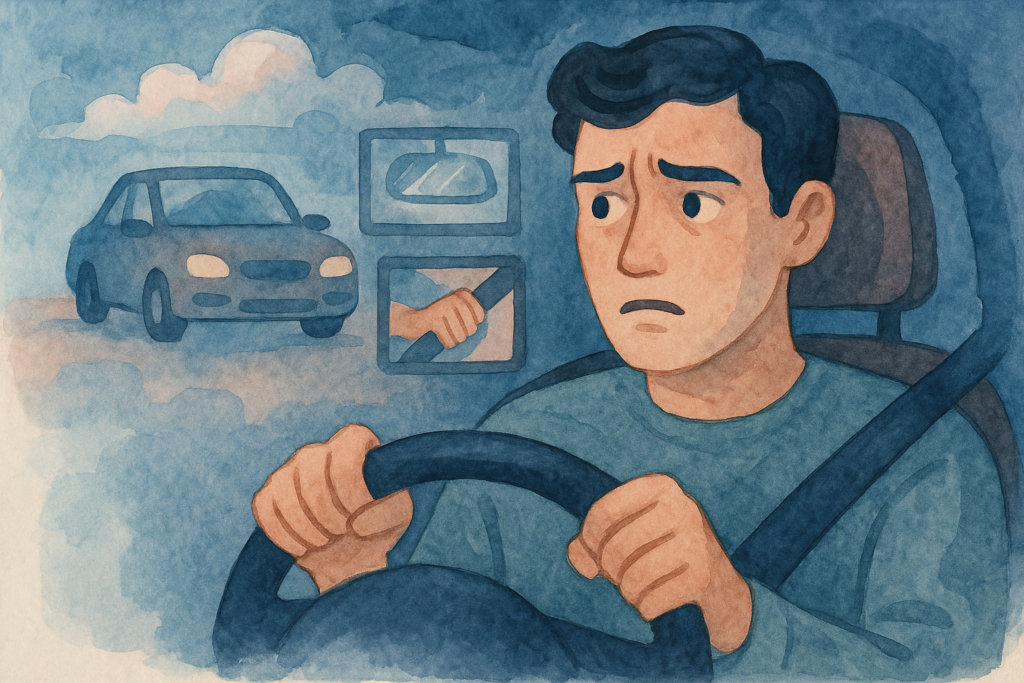
Driving can be a source of anxiety for many, manifesting in fears of accidents, compulsive checking, and obsessive thoughts. This article delves into driving anxiety, hit-and-run OCD, and the various compulsions that individuals may experience. We will explore how a cognitive-first approach through CBT can help reshape maladaptive beliefs for improved mental well-being.
Understanding Driving Anxiety and Related Compulsions
Driving anxiety, or amaxophobia, manifests as a debilitating fear that can significantly impact an individual’s daily life. Often triggered by traumatic experiences such as car accidents or witnessing vehicular incidents, this anxiety can result in a range of symptoms. Physical signs of driving anxiety include tachycardia, hyperventilation, and a profound sense of dread. These reactions can create a vicious cycle, where the emotional response to simply getting behind the wheel exacerbates the fears tied to that experience.
Individuals who suffer from driving anxiety often report feeling a compulsion to continually check their surroundings. This behavior is not merely a precaution; it stems from an overwhelming need to confirm safety before taking action, driven by the fear of losing control. For instance, someone may feel compelled to look over their shoulder multiple times before merging into traffic, convinced that they might inadvertently cause an accident. This is a manifestation of their internal narrative, where they believe that failing to check carefully could result in catastrophic outcomes. The anxiety can be so severe that it hampers their ability to drive altogether, effectively limiting their mobility and independence.
These obsessive thoughts can also be tied to specific fears of causing harm to others, particularly in the context of driving. A common example is “Hit and Run OCD,” where individuals obsessively ruminate about the possibility of having hit someone while driving, even if they have full confidence that they did not. They may find themselves turning back to retrace their routes, convinced they must confront any potential harm caused, thus leading to feelings of guilt and fear. As a consequence, such atypical behaviors often become part of their driving ritual, escalating their anxiety as they pivot between the compulsion to check and their underlying fear of vehicular harm.
Maladaptive beliefs contribute heavily to this anxiety landscape. An example includes the pervasive thought that one will certainly cause an accident if not vigilant. Such catastrophizing often leads individuals to overestimate the likelihood of danger, reinforcing a cycle of fear and compulsive behavior. This insecure mindset enables the anxiety to flourish during moments when they should be focusing on safe driving practices. As these individuals convince themselves of their perceived risk, they exhibit heightened apprehension and a reluctance to engage in normal activities like driving.
Recognizing the influence of these beliefs is crucial for managing driving anxiety. By challenging and reframing these thoughts, individuals can alter their perception of driving and break free from the crippling hold that these fears have over them. Learning to identify triggers, while also understanding the physical responses that accompany anxiety, can pave the way towards more adaptive coping mechanisms. Hence, unraveling the complex web of driving anxiety unveils pathways to recovery that can transform the experience of getting behind the wheel from one of dread and compulsion into a manageable, routine activity.
The Role of Cognitive Behavioral Therapy in Managing OCD and Driving Compulsions
Cognitive Behavioral Therapy (CBT) serves as a critical tool in addressing the intersection of obsessive-compulsive disorder (OCD) and driving anxieties, particularly when symptoms manifest as driving compulsions, hit-and-run fears, or the need to check critical components before operating a vehicle. Central to CBT is the identification and restructuring of maladaptive beliefs that drive these compulsions, ultimately enabling individuals to manage their fears more effectively.
Individuals coping with driving-related OCD may often find themselves trapped in cycles of catastrophic thinking. For example, the belief that one could accidentally harm a pedestrian while driving may escalate into a paralyzing fear of getting behind the wheel. Such thoughts can be fueled by a relentless internal dialogue that catastrophizes situations—picturing the worst possible outcomes, such as severe injury or fatality. This kind of thinking not only intensifies anxiety but can also create strong compulsions, like repeatedly checking mirrors or performing unnecessary safety checks before driving.
CBT targets these maladaptive beliefs through various techniques, fostering cognitive restructuring. One effective method is the identification of cognitive distortions, which includes recognizing patterns of all-or-nothing thinking, overgeneralization, and catastrophizing. For instance, someone might think, “If I drive today, I will certainly cause a terrible accident.” CBT encourages individuals to challenge this unreasonable thought, examining the evidence behind it and exploring more balanced alternatives, such as, “While accidents can happen, I have driven safely many times before, and I can choose to focus on the present rather than fixate on what could happen.”
Another powerful CBT technique is exposure therapy, which gradually introduces individuals to the situations and feelings they fear. In managing driving compulsions, this could involve creating a hierarchy of driving scenarios, starting with less anxiety-provoking situations, such as driving in an empty parking lot, then gradually progressing to busier roads. Each step is accompanied by cognitive restructuring aimed at challenging fears surrounding vehicular harm and compulsive checking behaviors.
Journaling can also play a vital role in CBT for driving anxiety. By documenting driving experiences and associated thoughts, individuals can increase their awareness of maladaptive beliefs and track progress in shifting their thinking patterns. Instead of responding with ritualistic checking behaviors, CBT encourages focusing on grounding techniques and positive affirmations during stressful driving situations.
Additionally, replacing compulsions—such as checking whether the doors are locked or if the car is safe to drive—with simple mindfulness strategies can bolster resilience. Techniques like deep breathing or acknowledging the sensations of being in a car can serve to anchor the individual in the present moment, reducing anxiety levels and enabling them to take calmer actions when faced with overwhelming fears.
Ultimately, CBT empowers individuals to navigate their fears and compulsions while driving, promoting a more adaptive and flexible mindset. By learning to confront their anxiety and challenge their obsessive thoughts, individuals can reclaim their sense of control and safety, transforming a source of stress into a manageable part of their lives. The skillful application of these CBT principles not only reduces driving anxiety but also fosters long-term emotional and psychological well-being.
Building Resilience and Well-Being: A Path Forward
Building resilience in driving anxiety requires a dynamic approach, grounded in the methodologies of Cognitive Behavioral Therapy (CBT). A critical element of this journey involves gradual exposure to driving situations, fostering a more comfort-driven mindset over time. For individuals grappling with fears of vehicular harm or checking compulsions while on the road, it’s essential to undertake this exposure at a pace that is manageable. This process begins with assessing individual thresholds for anxiety, which allows for the development of a structured plan that can progressively introduce challenging scenarios.
One common strategy is to start with less intimidating driving environments. For instance, someone initially fearful of driving in busy urban settings may begin by driving in quieter residential areas or during off-peak hours. The focus here is not only on becoming comfortable behind the wheel but also on confronting and restructuring negative thoughts associated with driving. When fear arises — such as the thought “I will hit someone” — individuals can employ thought-restructuring techniques to reframe this apprehension into a more realistic perspective, such as “I am a cautious driver, and I am fully aware of my surroundings.”
As individuals advance through their exposure hierarchy, they may encounter situational triggers—like hearing sirens or witnessing a minor accident—that can provoke checking compulsions, such as the impulse to pull over to confirm they did not cause harm. In these instances, CBT encourages practicing mindfulness and grounding techniques, which help to anchor oneself in the present moment. Instead of getting swept up by intrusive thoughts, recognizing them as products of anxiety can diminish their power.
A significant aspect of transforming fear into confidence lies in celebrating small victories. Individuals may document their progress, noting instances where they successfully navigated challenging driving situations without succumbing to their compulsion or anxiety. For example, a case study illustrates how Maria, who struggled with hit-and-run OCD, started with short drives and progressively tackled longer commutes. By consciously affirming her safety and practicing gratitude for each completed journey, she shifted her mindset towards focusing on her driving skills rather than perceived threats.
It’s crucial to emphasize that this journey is not linear; setbacks are a natural part of the process. Self-compassion becomes vital when individuals find themselves overwhelmed or experience a setback. The ability to acknowledge these feelings without judgment aligns with CBT’s emphasis on flexibility and adaptability in thought processes. Rather than interpreting a moment of anxiety as failure, individuals can view it as an opportunity for growth and further practice.
In summary, integrating these CBT practices fosters resilience and well-being in managing driving anxiety. Individuals learn to approach driving as a skill that can be developed rather than a threat to be feared. Through exposure, thought-restructuring, and self-compassion, the journey from fear to confidence in driving can become not only achievable but also a foundation for overall emotional regulation and personal empowerment.
Conclusions
In summary, understanding the interplay between beliefs, thinking, and feelings is crucial for managing driving-related anxiety and OCD. By addressing maladaptive thoughts through CBT, individuals can foster resilience, gain control over their fears, and enhance their overall well-being, paving the way for a more confident driving experience.