
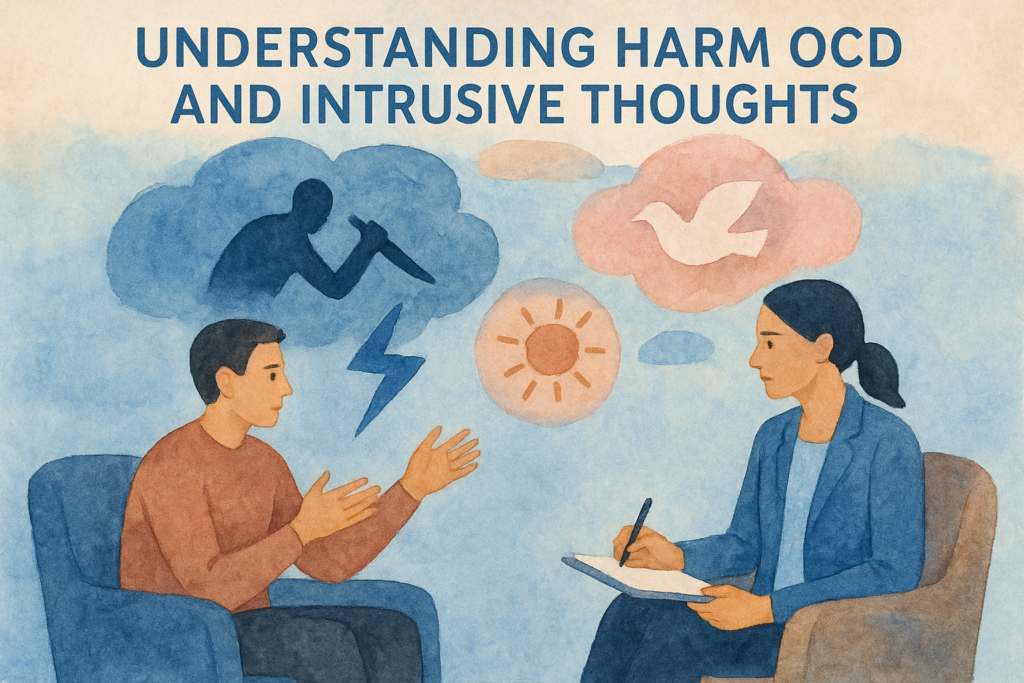
Harm OCD is a distressing condition marked by intrusive violent thoughts and fears of harmful actions towards others. This article delves into the cognitive-first approach of Cognitive Behavioral Therapy (CBT), emphasizing the importance of mapping maladaptive beliefs. Through flexible thinking patterns, we can foster resilience and improve mental well-being.
What is Harm OCD and Intrusive Thoughts?
Harm OCD is a subtype of obsessive-compulsive disorder characterized by intrusive thoughts that center around the fear of causing harm to oneself or others. These obsessions are often violent in nature and can lead to intense feelings of anxiety and distress. Individuals with Harm OCD may experience repetitive and unwanted thoughts that they might hurt a loved one or commit an act of violence, despite having no genuine intent or desire to do so. This condition can be debilitating, often resulting in significant disruptions to daily life and functioning.
The intrusive thoughts associated with Harm OCD can manifest in various ways. For instance, an individual might be at a family gathering when an image pops into their mind of harming a child. This scenario, although entirely contrary to their character and values, causes overwhelming panic. The individual may then obsessively scrutinize their thoughts, worrying about their authenticity and implications. This self-inquiry fuels a cycle of anxiety, as they become preoccupied with maintaining control over their thoughts to prevent potential harm.
Real-life scenarios often illustrate the painful and pervasive nature of such intrusive thoughts. For example, a parent might experience a distressing image of throwing their child down the stairs, accompanied by a strong sense of guilt and fear that they are a bad person. The resultant thought crime anxiety—a condition where individuals believe that having certain thoughts makes them culpable for potential actions—can lead to avoidance behaviors, like isolating themselves from situations where they might encounter children or sharp objects.
This hyper-vigilance to perceived danger causes a significant strain on relationships and social interactions. Individuals may constantly apologize for their thoughts or justify their actions to alleviate concerns from others, contributing to feelings of isolation and alienation. Alongside this, the incessant mental struggle to suppress these thoughts can lead to exhaustion and frustration, as the efforts to control or eliminate intrusive thoughts paradoxically reinforce them.
Furthermore, the internal conflict experienced by someone with Harm OCD may lead to compulsive behaviors. These can include frequent seeking of reassurance from others or engaging in safety rituals to feel secure. For example, a person might repeatedly check that kitchen knives are locked away or sanitizing their hands after using shared equipment, believing that these actions will protect against the imagined threats posed by their disturbing thoughts.
In summary, the experience of Harm OCD and intrusive violent thoughts significantly impacts the individual’s psyche and day-to-day life. This internal battle with aggressive obsessions and the associated fear of harming others creates a complex web of anxiety, guilt, and maladaptive behaviors that underline the necessity for effective therapeutic interventions. By recognizing the characteristics and implications of harm-related obsessions, we can better understand the debilitating nature of this condition and the urgent need for effective coping strategies.
The Role of Cognitive Behavioral Therapy in Managing OCD
Cognitive Behavioral Therapy (CBT) is widely recognized as an effective treatment for individuals grappling with Harm OCD, particularly those experiencing aggressive obsessions and intrusive thoughts. A pivotal component of CBT involves a cognitive-first approach, which emphasizes the importance of recognizing and restructuring maladaptive beliefs that contribute to harmful thinking patterns. By focusing on thoughts rather than just behaviors, CBT empowers individuals to challenge the irrationality of their fears, particularly the fear of causing harm to others.
Individuals with Harm OCD often become ensnared in a cycle of distorted thinking, where their intrusive thoughts are misconstrued as indicators of their true character or intentions. For example, a person might experience a fleeting thought of violence towards a loved one and, in response, become overwhelmed by guilt and anxiety. This cognitive distortion—interpreting a mere thought as a reflection of desire—exacerbates the individual’s fear of being a “bad person” or committing a thought crime, leading to heightened anxiety and avoidance behaviors.
CBT employs several therapeutic techniques designed to break this cycle. One of the most effective methods is Exposure and Response Prevention (ERP), which encourages individuals to confront their fears in a controlled and supportive environment. In ERP, a therapist might guide a client to intentionally expose themselves to the intrusive thought without engaging in compulsive behaviors—such as reassurance-seeking or avoidance—that typically follow. For instance, a client may be encouraged to imagine a scenario where they harm someone, then practice sitting with the distress this causes without resorting to safety behaviors. Over time, this gradual exposure can help reduce the power of the intrusive thoughts and lessen the accompanying anxiety.
Case studies have highlighted the transformative impact of CBT on individuals with Harm OCD. One particular case involved a client named Sarah, who was consumed by violent thoughts related to her young child. These thoughts led to significant avoidance of situations where she was alone with her child and a constant need for reassurance from her partner. Through CBT, and in particular ERP, Sarah was guided to confront her thoughts directly. This included scenarios where she imagined harm coming to her child and learning to tolerate the anxiety associated with these thoughts. Over several months of therapy, Sarah reported a significant reduction in her anxiety levels and an increased ability to engage in daily activities without fear.
Another case involved Tom, who had intrusive thoughts about committing acts of violence at work. His compulsive behaviors included avoiding his coworkers and regularly checking his emotions to ensure he felt “safe.” The cognitive restructuring aspect of CBT allowed Tom to identify and challenge his belief that having these thoughts made him inherently dangerous. Through structured exercises, he began to reframe his understanding of thoughts as mere mental events, not reflections of character. Consequently, Tom recognized that many people experience similar thoughts without acting on them, which helped alleviate his fear.
In summary, CBT plays a pivotal role in managing Harm OCD by emphasizing cognitive restructuring and exposure techniques. This therapeutic approach not only aids in reducing symptoms of aggression and anxiety but also fosters a deeper understanding of the relationship between thoughts and behavior. Through targeted interventions, individuals can learn to navigate their intrusive thoughts with resilience and confidence, paving the way for improved mental well-being.
Building Resilience Through Adaptive Thinking
Building resilience in the face of Harm OCD involves developing flexible thinking patterns that bolster mental strength and well-being. Individuals grappling with intrusive violent thoughts, whether they involve fears of causing harm to themselves or others, often find themselves trapped in a cycle of anxiety and obsessive thinking. Learning to foster supportive and helpful thinking can be a powerful antidote to these aggressive obsessions, enabling individuals to reclaim control over their thoughts.
Adaptive thinking begins with an awareness of the negative self-talk that can accompany OCD. Many individuals experience intrusive thoughts characterized by fear of doing harm, often labeled as “thought crime” anxiety. This term reflects the distressing belief that merely having certain thoughts equates to a desire or intent to act violently. To counter this, individuals can learn to differentiate between thoughts and actions; thoughts are not inherently indicative of future behavior. Practicing this distinction can reduce the emotional burden associated with these intrusive thoughts.
One effective technique for cultivating resilience is positive self-talk. When intrusive thoughts arise, individuals can consciously replace harmful interpretations with affirmations that reflect their true values and intentions. For instance, instead of saying, “I can’t believe I thought about hurting someone; I must be a bad person,” one could shift to, “Having a thought doesn’t mean I will act on it. I value kindness and compassion.” This conscious re-framing transforms destructive narratives into ones that promote self-acceptance and understanding.
Challenging irrational beliefs forms another cornerstone of adaptive thinking. Individuals can benefit from questioning the validity of their thoughts using a structured approach, often referred to as cognitive restructuring. This involves identifying the thought—such as “I’m a monster for thinking I could hurt someone”—and dissecting it by asking: “What evidence do I have that supports or contradicts this?” This process not only provides clarity but can also lead individuals to realize that their perceptions of themselves and their thoughts are often skewed.
Regular self-reflection plays a crucial role in building resilience. Keeping a journal can provide a safe space for individuals to express their thoughts and feelings without judgment. This practice encourages mindfulness, allowing individuals to observe their thoughts rather than becoming consumed by them. Over time, they can notice patterns, triggers, and progress, which fosters a sense of empowerment and agency over their mental health.
Realistic examples can highlight the effectiveness of these strategies. Consider Jane, who frequently experienced violent intrusive thoughts. By employing positive self-talk and actively challenging her irrational beliefs, she began to shift her emotional response to those thoughts. Instead of spiraling into panic, she learned to recognize them as mere noise—temporary, uncomfortable, but ultimately harmless. Through ongoing practice in self-reflection and flexible thinking, Jane reported significant relief from her distress and a greater sense of control over her mental landscape.
In conclusion, developing resilience through adaptive thinking is not just about managing harm OCD; it is about transforming the narrative around intrusive thoughts and aggressive obsessions into one of empowerment and understanding. With continuous practice, individuals can cultivate mental well-being that allows them to navigate their fears while staying true to their core values.
Conclusions
In conclusion, understanding and managing Harm OCD and intrusive thoughts through CBT can significantly enhance mental well-being. By mapping and redefining maladaptive beliefs, individuals can develop healthier thinking patterns, reduce anxiety, and cultivate resilience against intrusive fears. It’s essential to approach this journey with empathy and persistence.